



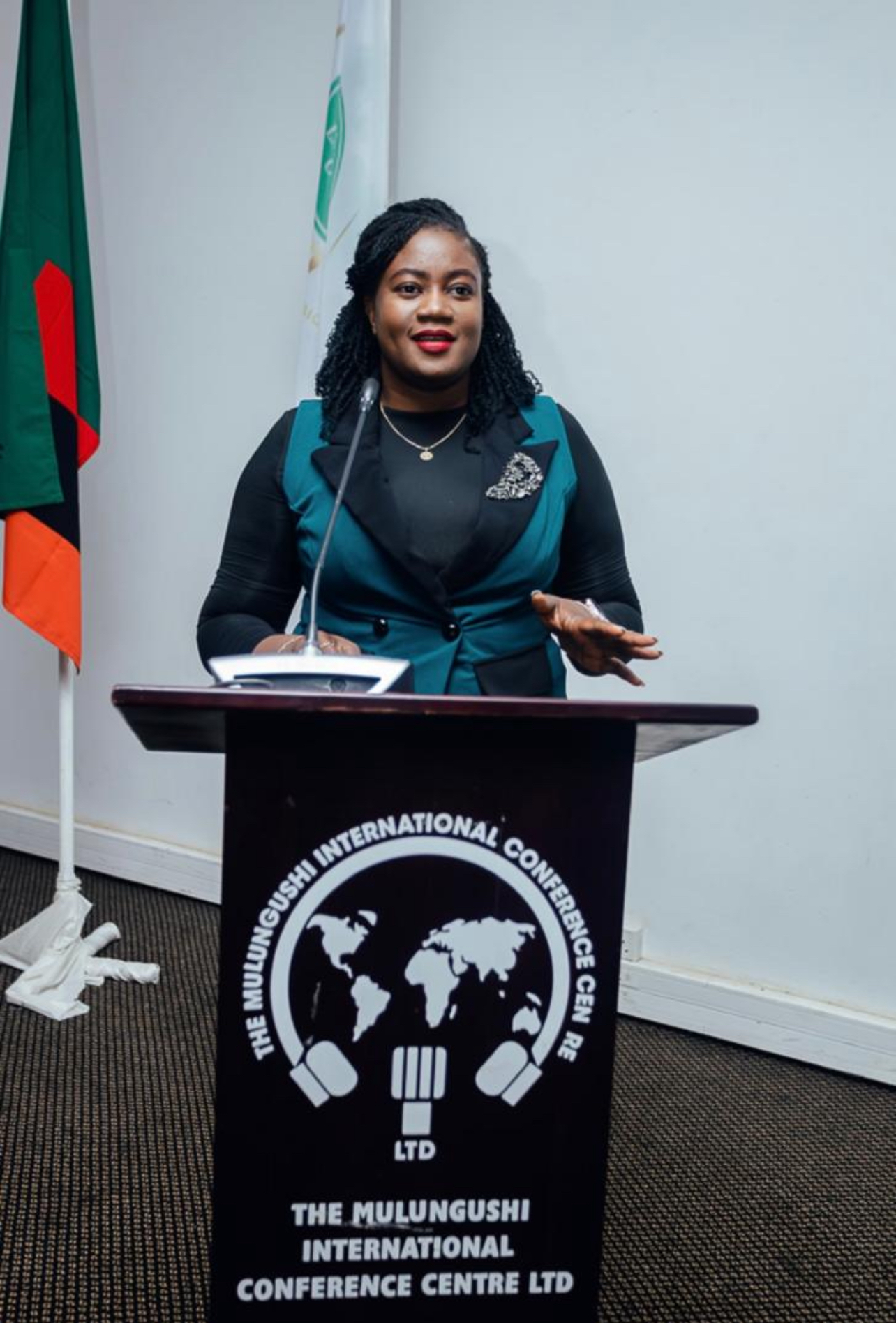
At the African Bar Association 2024 Annual conference,
Chinelo Audrey Ofoegbunam spoke on AfCFTA and Trade Law No 2 with the Theme- Fashioning a legal framework for intra-African Trade under the aegis of the African Continental Free Trade Agreement (AfCFTA): considerations for public procurement, intellectual property, the role of Artificial Inteligence (AI) on 30 October, 2024 at the Mulungushi International Conference Centre (MICC), Lusaka, Zambia.
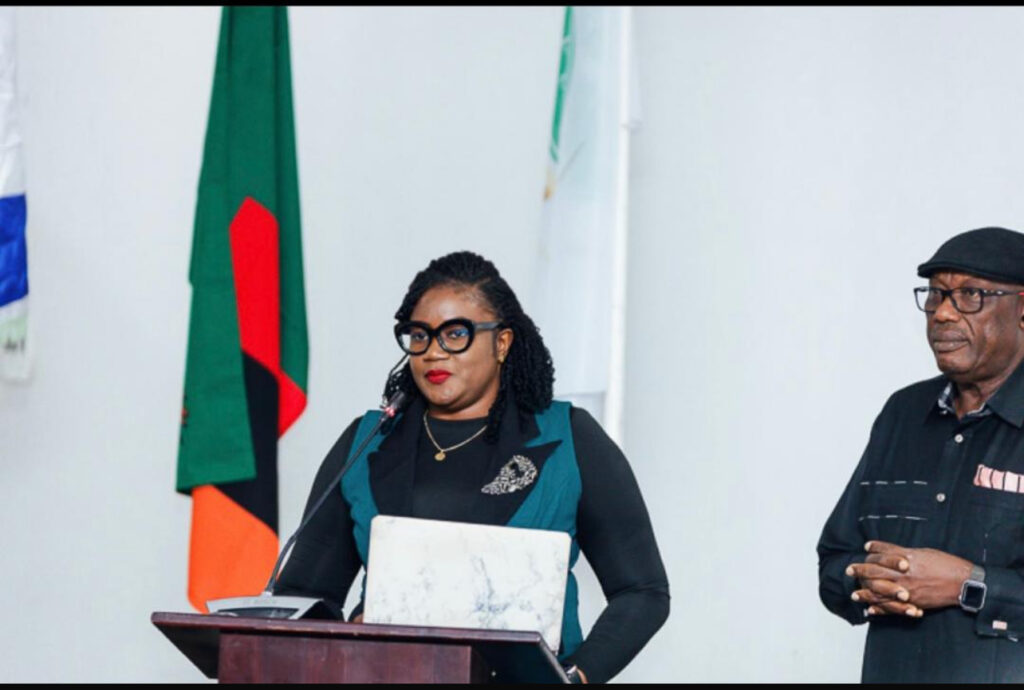
The panelists were;
1. Chief J.K. Gadzama- Chairman
2. Prof Amos Saurombe- Speaker
3. Ms Geraldine Mbah- Speaker
4. Mr Charles-Mugaga Mushizi-Speaker
5. Mr Musenge Sakala- Speaker
6. Mr Kenneth Dzandu-Speaker
7. Ms Chinelo Ofoegbunam-Speaker

In her intervention, she stated that the Single market aims to increase trade by over 50% within Africa. And Africa Could add $450 billion to GDP by 2035. Legal foundations is needed to unify diverse economic and legal systems.
Thus, the Intellectual Property, covering patents, trademarks, and copyrights, is essential for fostering innovation across African industries.
IP protections incentivize creativity and investment, yet inconsistent IP laws and enforcement across Africa hinder growth. AfCFTA can address these challenges by harmonizing IP standards and policies.
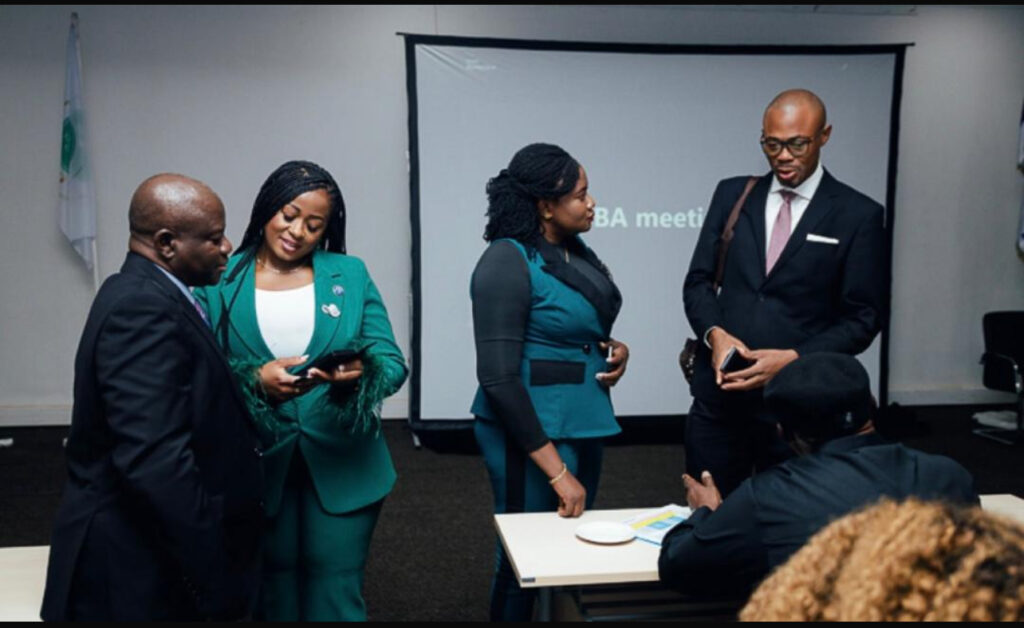
IP protections encourage African innovation and investment.
The Current IP challenges are fragmented laws, weak enforcement, piracy.
She said that AfCFTA’s role is to harmonize IP standards across member states for a unified market. Also, Public procurement accounts for 15-30% of GDP in many African countries. It’s a powerful driver of trade and development, with potential to open up cross-border contracting opportunities.
AfCFTA could standardize procurement practices, enabling African businesses to compete across borders.
She further said that Public procurement represents 15-30% of GDP in Africa. Key to economic growth and expanding access to government contracts. Standardization allows businesses to bid on contracts across borders.
Current Challenges in Public Procurement
Despite its importance, public procurement faces challenges such as fragmented regulations, corruption risks, and limited digital infrastructure. Small and medium enterprises, or SMEs, often struggle to access these opportunities. AfCFTA has an opportunity to streamline procurement processes, enhancing transparency and access.
Fragmented procurement rules create inconsistencies.
Transparency issues and corruption risks limit fair competition.
Lack of digital platforms and support for SMEs restricts access to contracts.
We can see successful models within Africa where IP protections and standardized procurement have spurred growth. For example, Nigeria’s Nollywood leverages IP protections to secure revenue streams, while Kenya’s Silicon Savannah has benefited from public procurement support in tech innovation. AfCFTA could amplify these successes continent-wide.
Again, the Nigerian Nollywood IP protection fosters a vibrant film industry, and Kenya’s Silicon Savannah Public procurement supports tech growth.
AfCFTA can replicate these models across Africa, promoting diverse industries.
Artificial Intelligence has the potential to transform trade facilitation. AI can automate customs processes and compliance checks, making trade flows smoother. AI-driven smart contracts allow for self-executing agreements, further reducing bureaucratic delays.
AI-driven automation for customs and compliance improves trade efficiency.
Smart contracts enable seamless, cross-border transactions.
Essential for AfCFTA’s vision of a streamlined trade landscape.
Legal and Ethical Considerations for AI in AfCFTA
Using AI in trade and procurement brings ethical and legal concerns, such as accountability, bias, and data privacy. AfCFTA must establish ethical guidelines and accountability frameworks to ensure fair, transparent AI use in trade facilitation and public procurement.
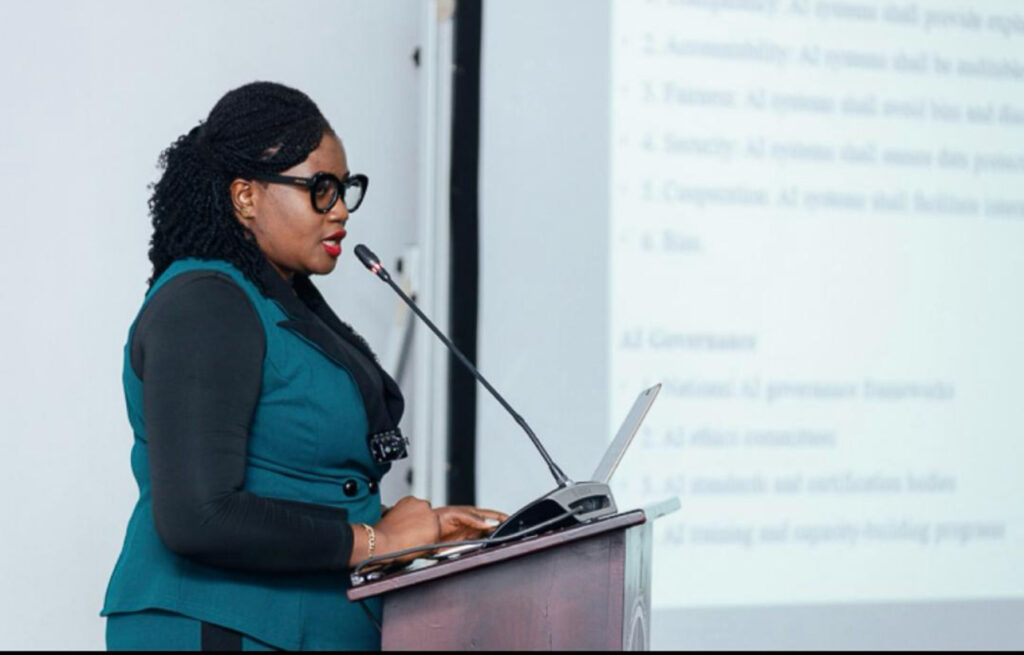
She noted the Ethical concerns are bias, accountability, data protection, and the Need for transparency and fairness in AI applications.
AfCFTA can establish AI ethical guidelines for trade integrity.
The Recommendations for AfCFTA’s Legal Framework For AfCFTA to succeed, a cohesive legal framework is key. We recommend standardizing IP and procurement laws, developing ethical guidelines for AI, and investing in training for local experts in IP and AI. Partnerships with universities and industries can also drive sustained growth development.
There is the need to Harmonize IP and procurement laws across member states.
Establish clear ethical guidelines for AI applications in trade.
Capacity-building initiatives for IP and AI knowledge in African countries.
Foster collaborations with academic and industry stakeholders.
Conclusion
In conclusion, by integrating IP, AI, and public procurement standards, AfCFTA can pave the way for a uniquely African trade framework that is innovative, ethical, and resilient. This approach doesn’t just mimic global standards but creates a framework rooted in African creativity and enterprise. As former UN Secretary-General Kofi Annan said, ‘We cannot wait for others to come and develop Africa; we have to develop it ourselves.
IP, AI, and public procurement are critical for AfCFTA’s success.
AfCFTA framework supports sustainable, inclusive economic growth.
An opportunity for Africa to lead in building a resilient, innovative trade model.
Also, as Nelson Mandela said, “It always seems impossible until it’s done.”
The size of our dreams must always exceed our current capacity to achieve them in Ellen Johnson Sirleaf words.
Let us start now.

About Chinelo Audrey Ofoegbunam
Chinelo Audrey Ofoegbunam is a dynamic, ingenious, noble, and vibrant advocate. An innovative business advanced expert who has undertaken relevant training in law and advocacy, business administration, governance, arbitration, leadership, and a host of others.
She focuses on the effective implementation of evidenced result-oriented paths, cases, fulfilled clients, and exceeds expectations. She is a generous, dedicated, and compassionate person, and indeed an advocate for justice and peace.
She has received several awards, medals of excellence, and honorary Awards for humanitarian acts. She was the best graduating student from the Chartered Institute of Arbitration (United Kingdom) in 2019, which caused her direct appointment in the Federal High Court-Alternative Dispute Resolution Centre.
Audrey is a member of several organizations to wit:
The St Vincent de Paul Society, Executive member of the Women and Girl-Child Capabilities Enhancement and Empowerment Organization (WGCCEEO), Devatop Center for Africa Development (DCAD), Nigerian Red Cross Society (NRCS), French Club Le Clezio; Young African Leadership Institute; The Nigerian Bar Association where she currently serves in an executive position as the Treasurer of the NBA Abuja Branch; The African Bar Association, Commonwealth Lawyers Association, and International Bar Association; The Nigerian Institute of Chartered Arbitrators, Chartered Institute of Arbitrators (UK), Federacion Internacional de Abogadas(FIDA); Institute of Mediation and Conciliation; Chartered Institute of Taxation, Institute of Chartered Secretaries and Administrators in Nigeria; Institute of ADR Registrars; Registrar, The Colloquium; and of the Rotary International.
Audrey is a Young African Leadership Institute Fellow, a Paul Harris Fellow, a Benefactor, an ADR Neutral, Federal High Court-Alternative Dispute Resolution Centre, and an Author of the weekly Legal Tip Series.
She speaks English, Igbo, and French; And loves playing badminton, listening to music, researching and writing, traveling, and swimming.